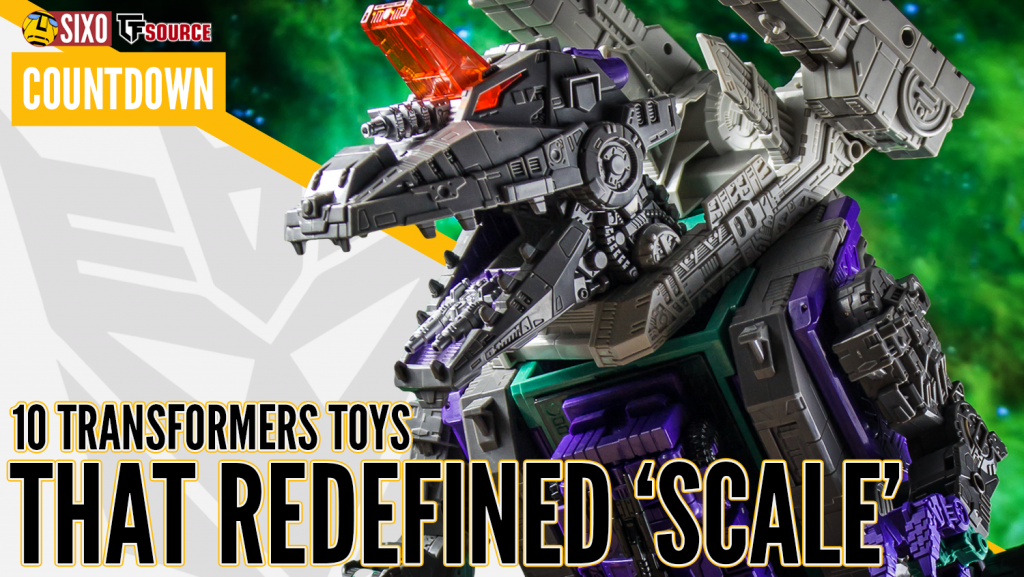
Few topics generate as much quiet confusion in Transformers collecting as scale. Ask ten fans what it means, and you’ll likely get ten different answers: real-world vehicle accuracy, cartoon-relative size, internal consistency, shelf presence, or simply whether a toy feels imposing enough in hand.
The truth is that Transformers has never adhered to a single, unified sense of scale. Instead, the line has always followed shifting priorities — play value, engineering ambition, character presence, or spectacle — with scale often bending, breaking, or being ignored entirely along the way.
With that in mind, this isn’t a list about what’s “correct”. Rather, it’s a look at ten toys (or lines) that changed how Transformers approaches size and proportion, each reflecting the values and design philosophy of its time.
#10: Early G1 Cars and Jets — Before scale was even a consideration
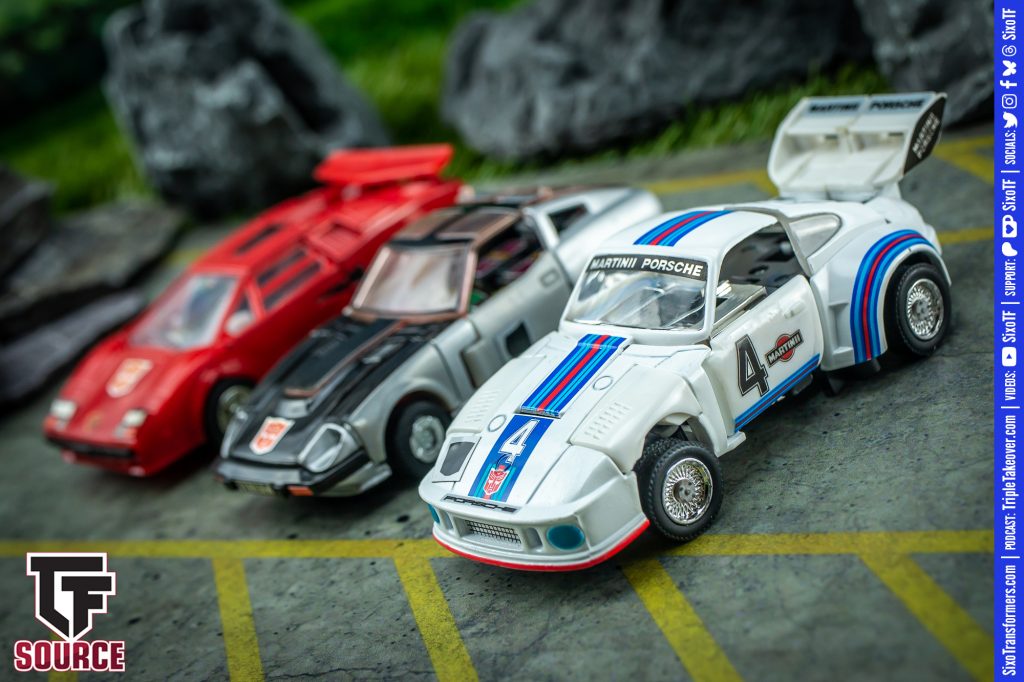
When Transformers launched in 1984, nobody cared about scale. The idea simply didn’t exist yet.
Part of the reason for this was the brand’s unusual origins. Hasbro merged two Takara toy lines — Diaclone, which featured mostly real-world vehicles (albeit without consistent scale), and Micro Change, which was all about household objects at a fairly uniform scale. The problem? That scale didn’t work when thrown into Transformers. Cassette decks and guns turning into massive alien robots created immediate complications, but crucially, no one really fussed about it. It was what it was.
The toys themselves were random by design, especially once Hasbro started licensing figures from non-Takara lines. The cartoon and other fiction interpreted this in a haphazard way, and over time, characters became defined by that animation lens. Jets, cars, and trucks shared shelf space with zero concern for proportional logic — because none was required yet. There was no reference point, no expectation of accuracy. Just imagination.
In hindsight, this “wrongness” has become part of G1’s charm. It represents a time before Transformers felt the need to explain itself.
#9: G1 Cityformers — When scale collapsed entirely
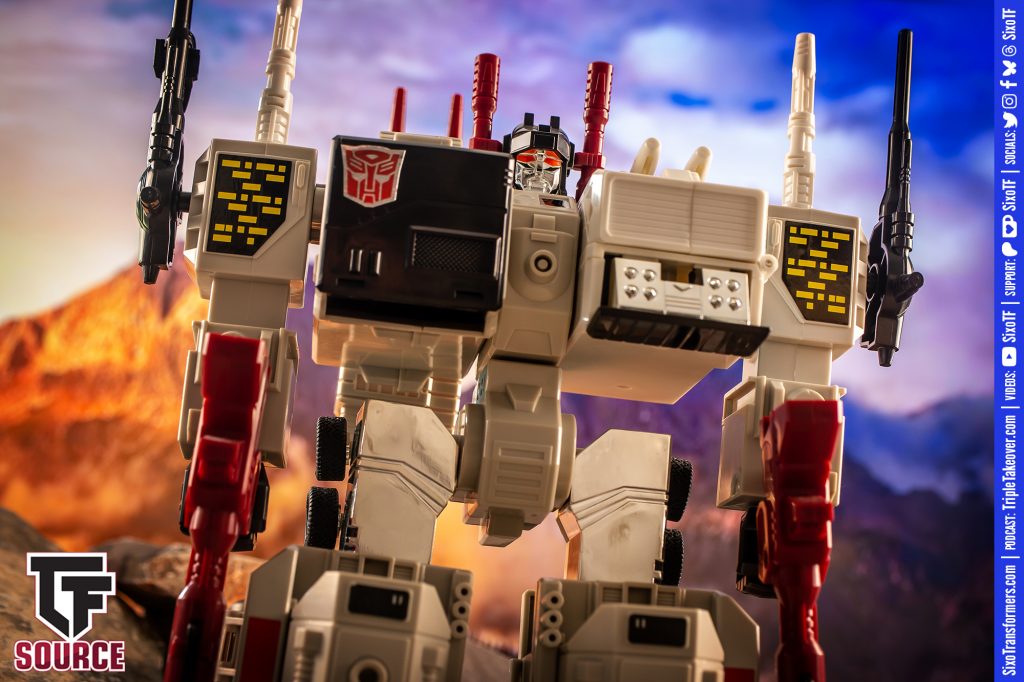
If early G1 toys were loose with scale, cityformers gleefully abandoned it altogether. Metroplex, Fortress Maximus, Scorponok, and the rest weren’t simply large robots — they were environments.
The crucial thing to understand about these 1980s toys is that they were never going to scale accurately versus the other figures surrounding them. Instead, it was about delivering a sense of size through sheer presence and play factor.
Metroplex is the key example here. The toy feels massive and imposing, turns into a city, and commands a shelf like few others. Yet in reality, it’s not that much bigger than Ultra Magnus — the so-called “city commander”. The absurdity is wonderful, but somehow it gets away with it.
Cityformers communicated importance through presence. Scale gave way to spectacle, wow factor and play value, and few toys embodied that philosophy more completely.
#8: Combiners — Where logic was sacrificed for iconography
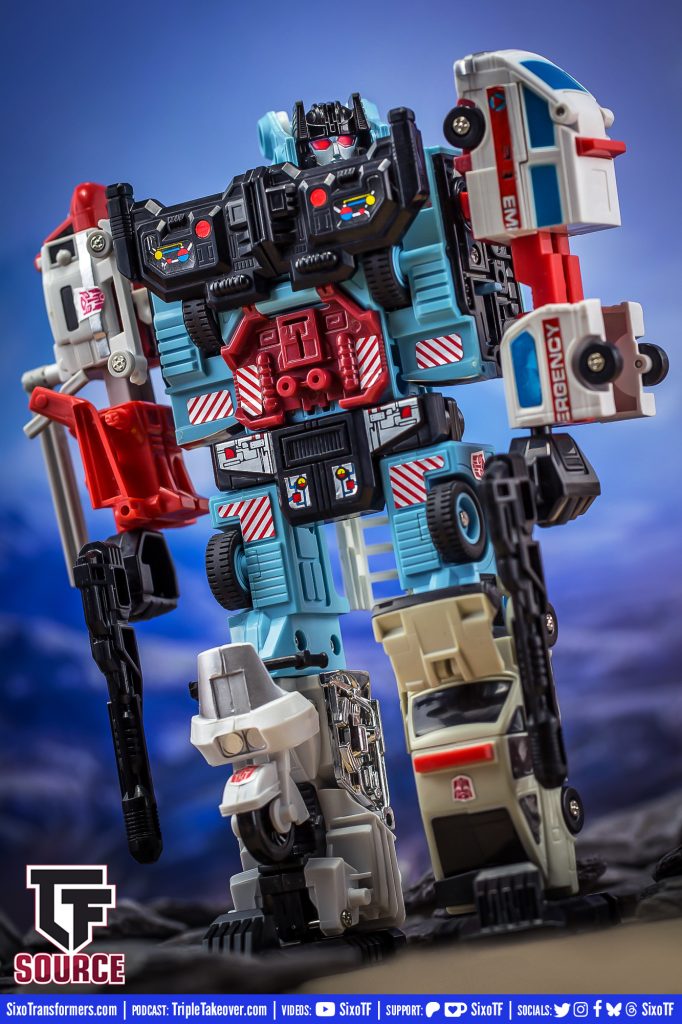
Combiners are, by their very nature, illogical. Real-world vehicles being mushed together in a manner where they cannot ever scale accurately with one another — a motorbike leg and a helicopter arm simply cannot work.
Bruticus is the most obviously bizarre example (so much so that it’s become meme-worthy), but the same applies across the board. There is no version of reality where these components resolve into a proportionate whole, and the designers clearly didn’t worry about it at all, either.
Instead, combiners prioritised the idea of teamwork and power. The visual impact of five toys becoming one far outweighed any concern for how big that one “should” be. Scale wasn’t just ignored here — it was rendered irrelevant.
#7: Binaltech / Alternators — Scale as a mission statement
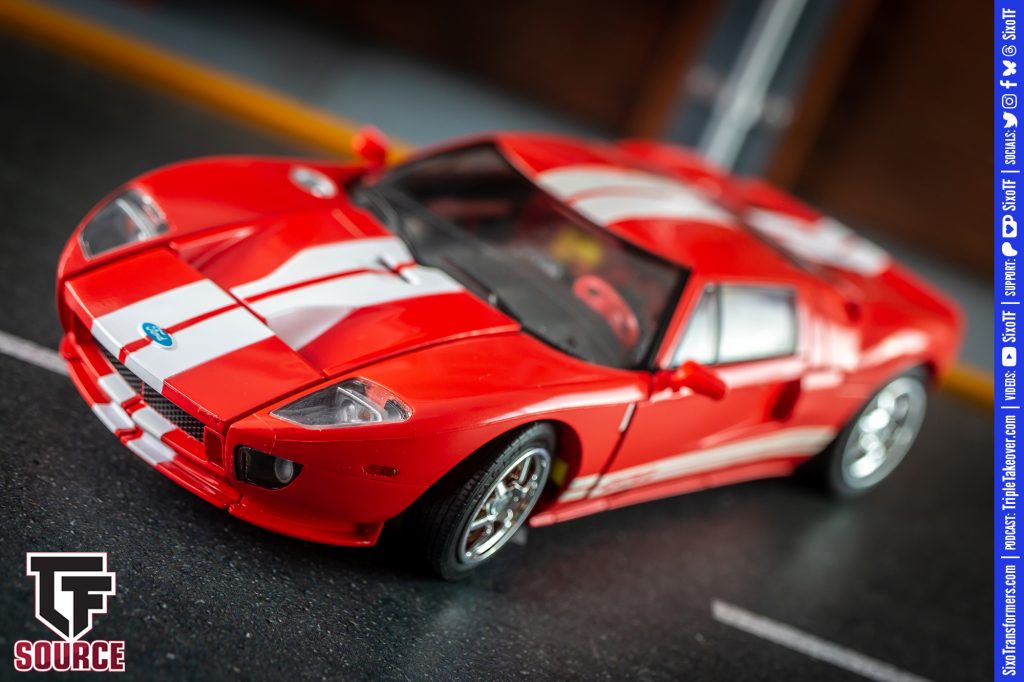
If any Transformers line can genuinely claim to care about scale, it’s Binaltech. Running from 2003 to 2008, the line committed fully to 1:24 scale, using licensed real-world vehicles as its foundation.
The key difference here was vehicle mode first and foremost — a rarity in Transformers. These felt akin to model cars that just happened to transform into robots. The result was a collection that looked cohesive when displayed together, with each car mode feeling like part of a unified whole. Robot modes were secondary to the realism of the vehicles, and compromises were made accordingly.
What’s especially interesting is that the first Masterpiece design, MP-1 Convoy, was made to effectively scale with Binaltech at the time, the two lines working loosely in tandem. It was a fascinating experiment from the early-to-mid 2000s.
Subsequent lines like Alternity picked up the baton, but Binaltech remains the brand’s crowning achievement in this regard. It didn’t redefine Transformers scale — it chose one, unapologetically — and carved out a unique niche that still resonates with collectors today.
#6: Human Alliance — A brief flirtation with meaningful realism
Human Alliance shares a lot of Binaltech’s ambition by delivering real-world scaled vehicles, also at 1:24 scale. However, the key difference was the introduction of human partners to the mix.
Transformers toys have had pilots before — it’s synonymous with the brand’s Diaclone roots, after all, and Headmasters made it a thing since. But this was different. The idea was to represent the live-action movies as closely as possible, whilst incorporating humans in a manner that felt meaningful. Cars were larger, interiors were detailed, and human figures were proportioned to fit believably inside — not just as accessories, but as characters in their own right.
The result was a series of toys that felt grounded in a way Transformers rarely does. And yet, the line never fully took hold. The added realism sacrificed robot mode complexity, and the approach quietly faded away — never to become a thing in subsequent lines.
Still, Human Alliance remains an intriguing “what if”. From a personal note, it’s also cool to see them on a shelf next to Binaltech — two lines that briefly prioritised realism over abstraction.
#5: Titans Return and Modern Titans — Scale through interactivity
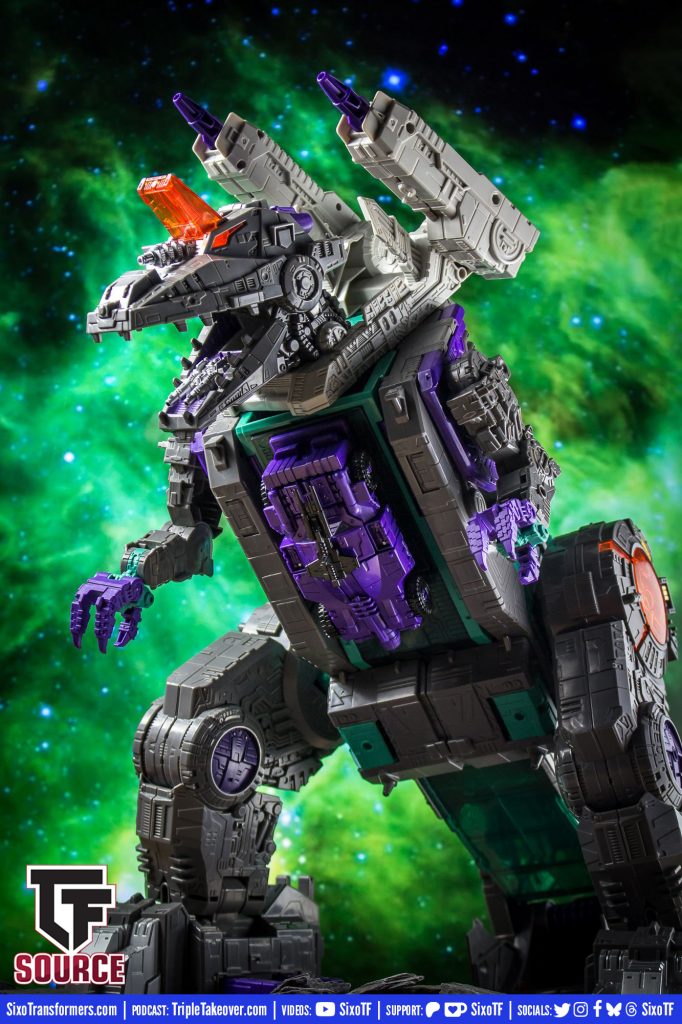
The introduction of modern Titan-class Transformers was epic in many regards. These massive toys represent city bots (and others) in a manner which delivers on the promise of these characters being as big as you could possibly imagine — practicalities go out the window.
But what made Titans Return work as a specific line was cross-compatibility. The big toys interacted with the smaller ones in meaningful ways — they weren’t just gigantic lumps of plastic taking up space in your house. Trypticon is the ultimate example, with its Titan Master eating gimmick and alternate modes that contain genuine play value when mixed with regular-sized toys.
Even the smaller figures themselves had numerous ways of interacting with one another. The whole Titans Return play pattern was exceptionally well thought through and delivered a sense of fun — and scale — in a way a lot of other lines don’t.
These toys succeed not by making sense proportionally, but by feeling monumental whilst remaining playable. They recapture the awe of vintage cityformers whilst benefiting from modern engineering.
#4: Masterpiece — The Cartoon Illusion
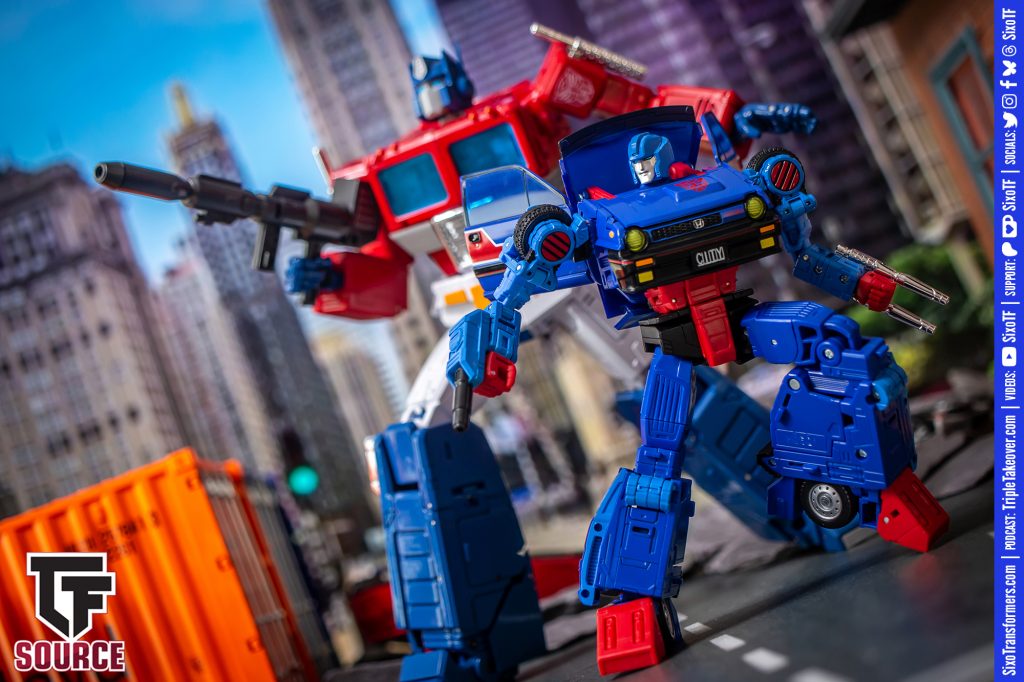
Masterpiece is perhaps the most vocal about scale of all ongoing lines, aiming to recreate the relative sizes seen in the 1980s cartoon (or respective media). Yet even here, compromise is inevitable.
The key thing to understand is that Masterpiece is specifically about robot mode scale — the alternate modes fall where they may. So whilst the cars and jets might be very real-world (and often licensed), they do not scale accurately. It’s sort of an inverse Binaltech in that regard.
Masterpiece is also chasing the impossible to some degree, given how wildly inconsistent the cartoon often was. Characters appear smaller or bigger from one scene to the next, to say nothing of obvious animation errors. On top of that, the line has intentionally “broken” scale where needed — Ultra Magnus is oversized so his cab can match Optimus Prime’s truck mode, Star Saber is downsized to coexist with other releases, and Ginrai’s cab robot is scaled down so his super mode can work at all.
Masterpiece doesn’t enforce scale — it negotiates it. The line is a constant balancing act between cartoon fidelity, engineering practicality, and shelf harmony.
#3: Studio Series — Selective accuracy
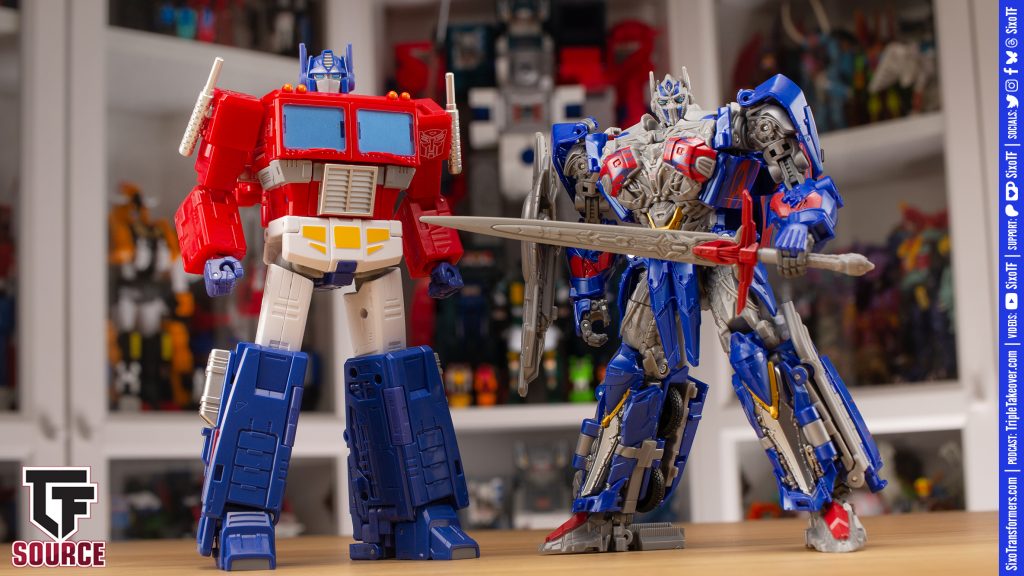
Studio Series introduced a more targeted approach to scale, focusing on recreating moments from The Transformers: The Movie, the live-action films, and newer properties such as Transformers One or the Devastation video game. Characters are sized relative to each other within those specific contexts, rather than across the entire franchise.
The result is a line that feels internally consistent without claiming universal accuracy. It’s scale as a storytelling tool— used where it matters, ignored where it doesn’t. Toys still fit into size classes dictated by price points, so compromises are made, but by and large it works.
Studio Series uses scale when it suits, but isn’t dogmatic about it — and that flexibility is part of what makes the line successful.
#2: HasLab Unicron — When scale became the centrepiece
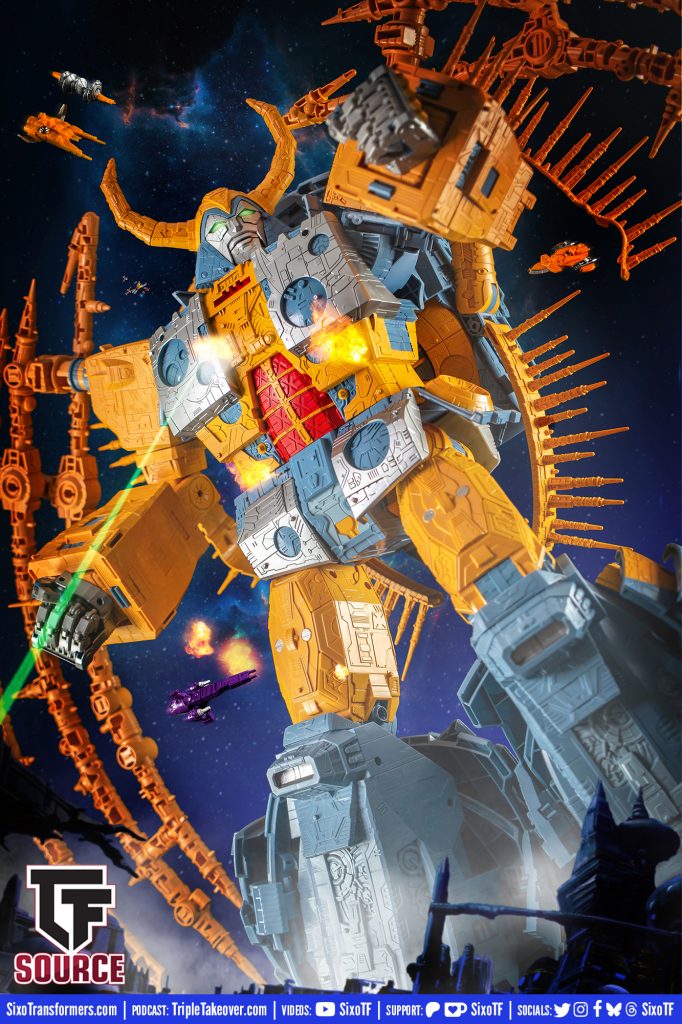
HasLab Unicron took the idea of scale and made it the entire point. This wasn’t a toy designed to fit into a collection — it was the collection’s centrepiece.
From a personal note, it was always funny when we used to joke about a Unicron toy on the playground as kids — we imagined it being the size of a house, or bigger! The reality is that HasLab Unicron is still the largest Transformers toy ever made (at current standing) and delivers on the “dream project” mission statement of HasLab in that regard.
At this size, proportional concerns dissolve. Unicron doesn’t need to scale with anything else, because nothing else is meant to scale with him. It’s a statement piece over being a toy that needs to worry about what anything else in the line is doing. The project demonstrated that scale could be aspirational, even symbolic, rather than practical.
#1: Missing Link — Restoring history, not correcting it
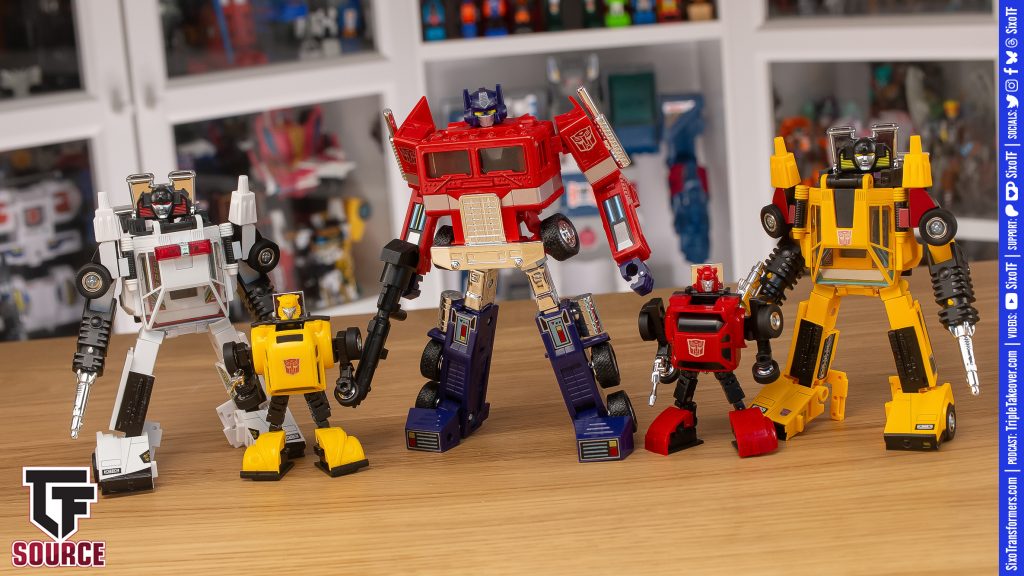
Missing Link represents a fascinating shift in philosophy. This is a new line, but one which recreates the past — quirks and all.
Rather than fixing scale inconsistencies, it preserves them. These toys recreate early G1 designs as they were, or would have been, before the fiction imposed rules upon them. The “wrong” proportions are intentional, restored as historical artefacts rather than updated interpretations.
It’s sort of full circle with #10 in a way — those original scale oddities are now being recreated forty years on, sometimes for a new or younger audience, in a way which is sure to raise fresh perspective on what scale even means when it comes to Transformers. The cool thing is that Takara isn’t correcting anything — they’re preserving it.
Missing Link acknowledges that scale wasn’t always a concern — and doesn’t need to be now. It celebrates Transformers before rationalisation, before charts and measurements, when imagination filled the gaps.
Transformers has never followed a single scale, and perhaps that’s the point. The brand has always adapted its sense of size to suit the story, the toy, or the moment — and maybe that flexibility is part of why Transformers continues to endure.
So, when it comes to scale, which approach resonates most with you?
TTFN


WHAT HAVE TRANSFORMERS DONE FOR ME?


Suggested Articles
-
 COUNTDOWN: Missing Link Convoy Repaints — What Could Be Next?
Posted on March 04, 2026 by Sixo
COUNTDOWN: Missing Link Convoy Repaints — What Could Be Next?
Posted on March 04, 2026 by Sixo
-
 COUNTDOWN: Just 30 Tremendous Transformers Tweets From the Last Few Weeks!
Posted on February 27, 2026 by Sixo
COUNTDOWN: Just 30 Tremendous Transformers Tweets From the Last Few Weeks!
Posted on February 27, 2026 by Sixo
-
 COUNTDOWN: 8 TakaraTomy Drops That Are About to Make a Serious Dent in Your Wallet
Posted on February 26, 2026 by Sixo
COUNTDOWN: 8 TakaraTomy Drops That Are About to Make a Serious Dent in Your Wallet
Posted on February 26, 2026 by Sixo
-
 COUNTDOWN: 9 Beast Wars Transmetal 2 Toys That Were Proud to Be Hideous
Posted on February 25, 2026 by Sixo
COUNTDOWN: 9 Beast Wars Transmetal 2 Toys That Were Proud to Be Hideous
Posted on February 25, 2026 by Sixo